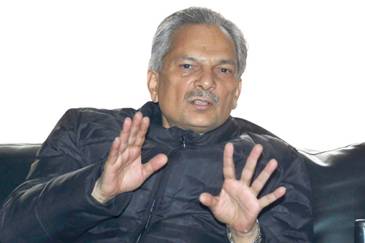
图为尼泊尔联合共产党(毛主义)前副主席、尼泊尔前总理,现任尼泊尔第二届制宪会议“宪法政治对话与共识委员会”主席巴布拉姆·巴特拉伊(Baburam Bhattarai)
译者按:
尼泊尔第二届制宪会议原定于2015年1月22日制定出新宪法,但是由于主要政党关于联邦组成和选举制度等方面的分歧严重,无法达成共识而告失败。尼泊尔联合共产党(毛主义)和马德西各党派支持单一民族行政划分制,执政的尼泊尔大会党和尼泊尔共产党(联合马列)等党派支持多民族多文化划分制。
号称尼泊尔毛派理论家的尼泊尔联合共产党(毛主义)前副主席、尼泊尔前总理,现任尼泊尔第二届制宪会议“宪法政治对话与共识委员会”主席巴布拉姆·巴特拉伊,接受尼泊尔英文报纸《共和国报》采访答记者问,可以帮助我们理解尼泊尔制宪会议屡屡失败的症结所在。现将该文翻译,以飨读者。
巴特拉伊:革命授权重于选举授权
原文载2015年2月4日尼泊尔英文报纸《共和国报》
尼泊尔和平与制宪进程开始以来,巴布拉姆·巴特拉伊(Baburam Bhattarai)就一直处于其核心。最近,他又担任非常重要的制宪会议“宪法政治对话与共识委员会” (Constitutional Political Dialogue and Consensus Committee, CPDCC) 主席。在接受尼泊尔英文报纸《共和国报》(republica)记者比斯瓦斯·巴拉尔( Biswas Baral)和阿肖克·达哈尔(Ashok Dahal)专访时,这位资深毛派领导人就制宪、反对派联盟计划好的抗议活动和尼泊尔新旧政治势力之间的意识形态分歧等,谈了自己的见解(黑体字部分为记者的问题)。
毛派领导的反对党派联盟宣布要进行一系列抗议活动。你们究竟计划了什么活动?
首先,你们必须明白我们是被迫举行抗议活动。近来,保守势力逐步开始显示其权威,使进步性变革发生逆转。他们想要推回毛派革命和变革的议程,这体现在制宪过程中。2006年变革以来,进步的和革命的力量日渐虚弱,而保守的和维护现状的势力却变得更为强大。我们担心新宪法会成为仅仅是1990年宪法的升级版。这是我们重新诉诸人民的原因。在咨询公众意见后,我们会就未来进程做出决定。一开始,我们会计划一些“软”活动。如果不奏效,为了捍卫进步性变革,我们做好了采取任何措施的准备。
目前有没有可能与执政联盟对话?
实际上在战争期间[①]我们就想与各政党对话。我们不断地设法举行谈判,是他们在躲避我们。即使现在,我们也随时准备对话。但是现实情况是,执政党派企图将其决定强加在我们身上,而他们的这些决定违背了最近达成的所有政治协议。他们已经启动投票程序,好像这不是一个主权国家的制宪会议,而是一个可以单纯以票数多寡为基础来解决问题的定期议会。
因此,如果执政联盟不收回其启动投票进程的决定,是否就没有对话的余地了?
即便是发起投票程序也是可以达成谅解的。我们本来会同意在遵守全面和平协议(Comprehensive Peace Agreement)、临时宪法(Interim Constitution)和过去达成协议基础上启动的法定程序。但是执政联盟似乎想碾碎我们,我们担心这会使把国家带上对抗的道路。特别是城市中产阶级一直在争辩说,既然大会党和联合马列拥有近三分之二多数,他们就可以按照自己的选择来制定宪法。表面上看这种说法有一些道理,但是这过分简单化了。选举产生的制宪会议旨在为尼泊尔社会带来系统性变革。但是执政联盟一直在要求我们加入他们的体系和他们的大多数,与潘查亚特[②]统治者过去所作所为别无二致。
但是,如果达不成共识就不能制定宪法,那你们为什么同意临时宪法里三分之二多数的条款?
研究一下世界历史就会发现,制宪会议从来就是革命的产物,正是革命为制宪会议设定了议程。制宪会议本身并无自己的议程。我们尼泊尔的情况,联邦主义、共和主义、世俗主义和包容性,这些都是革命的核心议程。制宪会议只能捍卫这些议程。1950年以来尼泊尔的悲剧就在于统治阶级只是口头表示要有进步性变革,但是制定宪法的时候,他们就故意省略进步性变革。这种情况1950年和1990年变革之后发生过,2006年之后这种情况一直在发生。
各政党以其新宪法版本诉诸人民。大会党和联合马列在制宪会议选举获得近三分之二多数,难道这还不能被视作对他们的议程的认可?
情况并非如此。目前正在发生的是革命授权和选举授权的冲突。革命授权支持进步性变革。大会党和联合马列试图利用以其在第二次制宪会议获得的选举多数,以选举授权来推翻革命授权。
首先,我们建立在金钱和力量基础上的选举制度本身就是有缺陷的。2008年选举期间,被压迫阶级和沉默的社群处于优势地位,因此能够得以显示他们的力量。但是五年下来,他们的声音渐渐变弱,而传统的统治阶级又开始显示其威力。统治阶级又一次能够利用其金钱和力量获得对自己有利的授权。我们不是说选举授权没有意义,我们认为革命授权大于选举授权。
其次,你们告诉我,目前声称占有三分之二授权的大会党和联合马列,他们是以联合宣言为基础开展制宪会议选举活动的吗?或者他们有没有在选举前结成联盟?如果是这样,他们应该这样向人民说,瞧,尼泊尔大会党和尼泊尔共产党(联合马列)主张这些议程,反对毛派和马德西各党所代表的其他议程。但实际上,他们是作为竞争者开展选举的,他们现在以其所谓的选举授权为基础来背叛人民。联合马列的选举宣言主张是直接选举总理、混合身份认同(‘combined identity’)联邦模式和按比例选举制。关于联邦组成,其宣言规定将设立林布旺[③]-梅吉省(Limbuwan-Mechi),塔姆旺[④]-甘达吉(Tamuwan-Gandaki)省和尼瓦-巴格马蒂省(Newa-Bagmati)。可是现在该党却背弃直接选举总理,关于国家重建,声称不想听什么族群认同(ethnic identity);而且还想恢复简单多数票当选的选举制度。该党得到背弃自己承诺的授权了吗?
反对派领导人之一,比贾亚·库马尔·加查达尔[⑤]说,已经就四个有争议的宪法问题中的三个问题达成协议,而把第四个问题联邦组成留待未来解决,但是毛派放弃了。
没有这样的协议。加查达尔的确提出过替代方案,但是我们后来发现,他只是转达了尼泊尔大会党的建议,而不是提出他自己的建议。通过解决关于联邦制的主要问题,进而颁布宪法是毫无疑问的。
目前执政党派和反对党派的主要争论焦点是什么?
大会党和联合马列的民主理念与毛派和其他新力量的民主理念有着天渊之别。执政党派从根本上支持自由主义的民主(liberal democracy),强调多数决定原则、定期选举和多党竞争。我们对此并不反对。但是我们认为这还不够。我们一向主张,在一个被种姓、阶级、性别和社群界线深度割裂的社会,我们所需要的是包容性民主(inclusive democracy)。这就有必要在联邦重组过程中确保受压迫和被边缘化民族的权利。其次,还有必要在选举制度中确保工人阶级和农民、妇女、达利特人[⑥]和贾那贾提人[⑦]等在议会中按比例拥有自己的代表。这是包容性民主的两大特征。因此,主要的斗争就在于自由主义的民主和包容性民主之间。
这些意识形态分歧是如何转化成为制定新宪法的争论的?
其一,我们一直坚持首先要有真正的联邦制。真正的联邦制意味着被压迫民族必将拥有属于自己的邦,在这些邦内他们的权利和民族特性得以保障,这是全世界关于联邦制的定义;另一标准是,保证其语言、文化、地理和历史的特性。但是现在大会党和联合马列甚至都不想听这一点。再者,制定宪法的一个重要问题就是按比例代表制。如果我们按照执政党派的希望背弃这一点,那么就是对包容性议程的毁灭。我们在这两个问题上无法妥协。
但是,难道执政联盟提出来的联邦模式没有在某种程度上回应这些关切?
没有。如果你们看一下他们提出的七省模式,除了一个省之外,其他每一个省里都是在过去250年里统治这个国家的雅利安-卡斯族[⑧]传统统治精英占大多数。
作为雅利安-卡斯族,大会党和联合马列领导人的山区婆罗门种姓(Hill-Brahmin)心态又一次占上了风。他们试图利用中产阶级的心态,即想要变革但却不愿牺牲其舒适生活。国家机构的80%以上依然被占全国人口三分之一的雅利安-卡斯族占据,全国三分之二以上的人口被完全忽视。
毛派是1990年变革之后最早提议建立制宪会议,然而他们却发现自己在选举游戏中被人利用策略击败。第二届制宪会议对于你们来说是否变成了某种负担?
正如我所说,尼泊尔人民被欺骗了。在为参选第二届制宪会议游说时,他们向人民承诺某些东西,但是他们现在所要发布的却恰恰与其承诺相反。这是欺骗,我们要通过全国范围的抗议活动揭露这种欺骗。
难道你不认为毛派是因为在第一届制宪会议任期内的失败才失去公众的支持?
这取决于你们所说的公众指的是哪部分人。即使国王统治时期的评议会五人(Panchas)也声称得到了公众支持。他们不是也赢得了1980年全民公决?但是人民明白,他们这个胜利是通过金钱和力量取得的。同样的事情发生在第二届制宪会议选举。此外,选举授权是短期的,而系统性变革则会持续数百年。因此,并非我们没有得到公众支持。当然啦,正如诺姆·乔姆斯基(Noam Chomsky)所言,一直有人努力“制造共识”(‘manufacture consent’)。尤其在城市里,各种非政府组织、国际非政府组织和媒体的宣传在制造利于统治阶级的共识。否则,你们能说像达利特人、贾那贾提人、马德西人和妇女这些被边缘化和被压迫的社群没有任何声音?毛派就代表这些社群。
如果你们认为这些社群的权利得不到这届制宪会议的保证,你们会怎么做?
我们认为制宪会议已经被保守势力绑架。这届被绑架的制宪会议运作起来更像是一个议会。我们认为有必要进行新的革命以把这个议会转换成制宪会议。但是如果不结束制宪会议被绑架的这种状态,历史将需要新的转折,被压迫和被边缘化的社群将再次揭竿而起。
你一再批评城市中产阶级,你们如何希望通过疏远这相当大的一部分人来重新获得政权?
获得他们的支持并非难事。中产阶级支持掌权者。就这么简单。如果下层阶级上台并开始主张其权利,中产阶级就会支持下层阶级。但是如果下层阶级虚弱而上层阶级开始施展自己的影响,那么中产阶级就会向上层阶级摇摆。他们总是摇摆不定的。
难道你不认为尼泊尔社会结构已经历了根本转变?一半尼泊尔家庭都有一个成员在国外工作。照此,农村青年这个传统上毛派的基础,不就日渐丧失了吗?
青年是被迫离开的。他们离开是因为尼泊尔社会结构的不平等和广泛存在的歧视。但是年轻人离开这个国家去国外工作不是长久之计。如果你们看看大会党和联合马列的政治、社会和经济政策,他们没有提出解决这个问题的办法。今日尼泊尔最大的悲剧就是这两个最腐败的政党在联手管理这个国家。我们无法指望他们会为除了传统统治精英这一小部分人之外的任何人的利益效力。
我们听说反对派领导人谈及“无形的力量”在激励大会党和联合马列成为蓄意阻挠者。你们暗示什么?
在尼泊尔这样一个分裂的社会里,上层阶级有既得利益者和强大的国内国际网络。这些国内和国际行为体自然会支持保守势力。但是大会党-联合马列联盟的支持者们忘记了,如此一个邪恶的联盟可以阻止进步性的变革一时,但是终究人民将会拥有最终的发言权。
你是否认为参加选举政治是犯了个错误?
我们认为选择走和平与宪法道路没有错。我们错在没有能够看透旧有的统治阶级攫取毛派革命成果的意图。
这将是一场宣传活动,抑或更大程度上是一次旨在得到公众反馈的努力?
基本上是一场宣传活动。我们会告诉公众,最近的成果如何被暗地里破坏,制宪会议如何被绑架。我们会请求公众大声地捍卫进步性的变化。2月28日我们要把群众召集到首都,迫使统治阶级倾听他们的声音。
(河北经贸大学尼泊尔研究中心 张树彬 译)
英语原文:
The mandate of revolution bigger than election mandate: Bhattarai
REPUBLICA
Baburam Bhattarai has been at the heart of the peace and constitutional process since its starting days. Most recently, he has served as chairman of the Constituent Assembly’s all-important Constitutional Political Dialogue and Consensus Committee (CPDCC). In an extensive interview with Biswas Baral and Ashok Dahal, the veteran Maoist leader shares his insights on constitution making, the planned protest programs of opposition alliance and the ideological divide between ‘old’ and ‘new’ forces in Nepali politics.
The opposition alliance under Maoists has announced a series of protests. What exactly are you planning?
First you have to understand that protest is our compulsion. Of late, regressive forces are gradually starting to assert themselves and to reverse progressive changes. They are trying to push back the agenda of (Maoist) revolution and change. This is also reflected in constitution-making. Since the 2006 changes, progressive and revolutionary forces have steadily become weaker while regressive and status quoist forces are gaining in strength; we fear the new constitution will only be an updated version of the 1990 constitution. That is why we are going back to the people. We will decide on future course after public consultation. At first, we are planning ‘soft’ programs and if those don’t work we are ready for whatever it takes to safeguard progressive changes.
Is there at present any possibility of dialogue with the ruling alliance?
Even during the time of war we wanted dialogue with political parties. We were constantly trying to come to the negotiating table; it is they who shunned us. Even now, we are always ready for dialogue. But the situation now is that the ruling parties are trying to impose their decision on us, which is against the spirit of all recent political agreements. They have already embarked on the process of voting as if this was not a sovereign Constituent Assembly but a regular parliament where issues are settled based purely on mathematical calculus. They want us to rubberstamp whatever they decide through the majority process.
So there is no room for talks unless the ruling alliance takes back its decision on voting process?
There could have been an understanding even to initiate the voting process. We could have agreed to due process initiated by honoring the spirit of the Comprehensive Peace Agreement, the Interim Constitution and past agreements. But the ruling coalition seemed intent on steamrolling us, which, we fear, could take country on the path of confrontation. The urban middle class in particular has been arguing that since Congress and UML have near two-third majority, they can write constitution of their choosing. On the surface, this argument has some merit. But it is also simplistic. The Constituent Assembly was elected to bring about systemic change in Nepali society. But the ruling coalition has been asking us to come within their system and within their majority, just like the old Panchayati rulers used to do.
But if there can be no constitution without consensus why did you agree to the provision of two-third majority in Interim Constitution?
If you study world history, Constituent Assembly has always been a product of revolution and it is the revolution which sets the agenda for the assembly. They assembly itself doesn’t have any agenda. In our case, federalism, republicanism, secularism and inclusivity, these were the core agendas of the revolution. The Constituent Assembly can only safeguard these agendas. The tragedy of Nepal since 1950 is that the ruling class pays lip service to progressive change, but when it comes to writing the constitution it willfully omits progressive agenda. This happened after the changes of 1950 and 1990, and the same is happening after 2006.
Political parties went to people with their versions of new constitution. If Congress and UML have together secured near two-third majority, can’t this been seen as endorsement of their agenda?
It is not like that. What is happening right now is a clash between the mandate of the revolution and the mandate of recent elections. The mandate of revolution was in favor of progressive change. Congress and UML are trying to leverage the numerical mandate they secured in second CA polls to overturn the mandate of revolution. First of all, our electoral system based on money and muscle is itself faulty. During the 2008 election, the suppressed classes and voiceless communities were in the ascendency and hence able to assert themselves. But five years down the line, their voice was fading and the traditional ruling class again started to assert itself. The ruling class was once again able to employ money and muscle to secure a mandate in its favor. We are not saying electoral mandate is meaningless; what we are saying instead is that the mandate of revolution is bigger.
Secondly, you tell me, did Congress and UML who now claim to have two-third mandate campaign for CA elections on joint manifesto? Or did they have a pre-poll alliance? If so, they should have gone to the people saying look, Nepali Congress and CPN-UML represent these agendas, as against the Maoists and Madheshis who represent some other agendas. But they went into elections as competitors, and they are now trying to betray the people on the basis of their so-called electoral mandate. UML’s election manifesto had a directly elected prime minister, ‘combined identity’ federal model and proportional electoral system. On federalism, it provided for Limbuwan-Mechi, Tamuwan-Gandaki and Newa-Bagmati provinces. But now it has gone back on directly elected prime minister; on state restructuring, it says it doesn’t want to hear of ethnic identity; and it wants to restore First-Past-The-Post electoral system. Does it have the mandate to go back on its promise?
One of the opposition leaders, Bijaya Kumar Gachachadar, has said that there had been agreement to settle three of the four contentious constitutional issues and to settle the fourth, federalism, in the future, but the Maoists backtracked.
There was no such agreement. Gachachadar did suggest the alternative, but we later found out that he had only been forwarding the suggestion of Nepali Congress. It was not his proposal. There is no question of promulgating constitution by keeping the main issue of federalism on hold.
What is the major bone of contention between the ruling and opposition parties right now?
There is vast difference between the idea of democracy of Congress and UML and the idea of democracy of Maoists and other new forces. The ruling parties are basically in favor of liberal democracy, with its emphasis on majority rule, periodic elections and multiparty competition. We are not opposed to it. But we don’t think that is enough. We have been saying that in a society deeply divided along caste, class, gender and communal lines, what we need is inclusive democracy. This entails federal restructuring to secure the rights of the oppressed and marginalized nationalities. Second, it entails proportional representation of working class and peasantry, women, dalits and janajatis in electoral system. These are two main features of inclusive democracy. Thus the main battle is between liberal democracy and new inclusive democracy.
How do these ideological divides translate into debates on new constitution?
One, we have been insisting there should first be genuine federalism, which means the oppressed nationalities must get federal states where their rights and identities are secure. This is the definition of federalism around the world. The kind of administrative re-division Congress and UML have been talking about is not federalism. They are trying to fool the people. There was unanimous acceptance both in the first CA’s State Restructuring Committee as well as the State Restructuring Commission set up later that there would be five basis of identity, the first of which is ‘collective ethnic identity’. The other criteria are linguistic, cultural, geographic and historical identities. But Congress and UML don’t even want to hear of this these days. The other important constitutional issue is proportional representation. If we go back on this, as the ruling parties want to, it will be death of inclusive agenda. We cannot compromise on these two issues.
But doesn’t the federal model proposed by ruling coalition also address these concerns to an extent?
No, it doesn’t. If you look at their seven-province model, expect in one province in every other province there is majority of traditional ruling elite, the Arya-Khas nationality that has ruled the country for last 250 years. The Arya-Khas, Hill-Brahmin mentality of Congress and UML leaders is starting to prevail once again. They are trying to play on middle class mentality, which wants change but doesn’t want to sacrifice their comfort. More than 80 percent of state apparatus is still captured by Arya-Khas nationality, which comprises one-third of national population. More than two-third of the national population has been completely bypassed.
The Maoists were the ones to first propose Constituent Assembly after 1990 changes. Yet they now find themselves outmaneuvered in the electoral game. Is the second CA becoming something of a burden for you?
Like I said, Nepali people have been cheated. While canvassing for second CA polls, they had promised people certain things, but they are delivering just the opposite. This is fraud and we want to expose this fraud through our nationwide protest campaigns.
Don’t you believe Maoist party lost public support owing to its own failures during the tenure of first Constituent Assembly?
This depends on which public you are talking about. Even Panchas claimed public support. Didn’t they win the 1980 referendum? But people understood that the victory had been achieved through money and muscle. The same thing happened in the second CA elections. Moreover, electoral mandate is short-term while systemic change lasts for hundreds of years. So it is not that we don’t have public support. Rather, as Noam Chomsky says, there has been an effort to ‘manufacture consent’. Especially in urban areas, there has been propaganda from various NGOs, INGOs and media houses to manufacture consent in favor of ruling class. Otherwise, can you say the marginalized and oppressed communities like dalits, janajatis, Madheshis and women don’t have any voice? The Maoist party represents these communities.
What will you do if you feel the rights of these communities cannot be secured by this Constituent Assembly?
We believe the CA has of late been hijacked by regressive forces. This hijacked CA functions more like a parliament. We believe there is a need for a new revolution to convert this parliament into Constituent Assembly. But if this state of hijack does not end, history will take a new turn. The oppressed and marginalized communities will once again revolt.
You have repeatedly criticized urban middle class. How do you hope to regain state power by alienating this sizable section of the population?
It is not hard to gain their trust. The middle class supports those who have power. Simple as that. If the lower class comes up and starts asserting its rights, the middle class will support the lower class. But if the lower class is weak and the upper class starts exerting itself, the middle class swings towards the upper class. They are always vacillating.
Don’t you think the structure of Nepali society has undergone fundamental shift? Half of Nepali households have a member working abroad. As such, hasn’t there been steady erosion of the traditional Maoist base, the rural youth?
The youth are leaving of compulsion. They leave because of structural inequalities and widespread discrimination in Nepali society. But youth leaving the country to work abroad is not a permanent solution. If you look at the political, social and economic policies of Congress and UML, they offer no solution to this problem. The biggest tragedy for Nepal today is that two of the most corrupt parties are now jointly running the state. We can’t expect them to work for the benefit of anyone except a very small section of traditional elite.
We hear opposition leaders talk of ‘invisible forces’ motivating Congress and UML to be obstructionists. What are you hinting at?
In a divided society like Nepal, the upper class has vested interests and strong national and international networks. These national and international actors will naturally support regressive forces. But supporters of Congress-UML alliance forget that such an unholy alliance can obstruct progressive changes for a while, but eventually people will have ultimate say.
Do you believe you made a mistake by joining electoral politics?
We don’t think we made a mistake by choosing the path of peace and constitution. Where we erred was in failing to comprehend the designs of the old ruling class intent on wresting away the achievements of the (Maoist) revolution. That is why we are going back to the people to explain our position.
Will it be an awareness campaign or more of an effort to get public feedback?
It will basically be an awareness campaign. We will tell them how recent achievements have been undermined and how the Constituent Assembly has been hijacked. We will ask them to raise their voice to safeguard progressive changes. And on February 28 we want to bring the masses to the capital and compel the ruling class to hear their voice.
Published on 2015-02-04 09:00:57 |
